

ADHD home organization system is not just about pretty bins or color-coordinated shelves—it’s about creating low-cost, functional setups that actually make life easier for adults with ADHD. If you’re tired of “perfect” Pinterest ideas that fall apart by week two, this guide offers an honest, practical route that works in short bursts and on a real-world budget.
Key Takeaways
- Most “mainstream” organization tips fail ADHD adults because they ignore executive function and maintenance realities.
- Evidence is lacking on the “best” ADHD home organization system, so practical, low-friction, visual systems are your safest bet.
- Effective setups can be built for under $100 with DIY bins and labels or by hiring virtual help for $100–$300. On-site organizing costs $300–$1,000+.
Table of Contents
Why ADHD needs a different home-organization approach
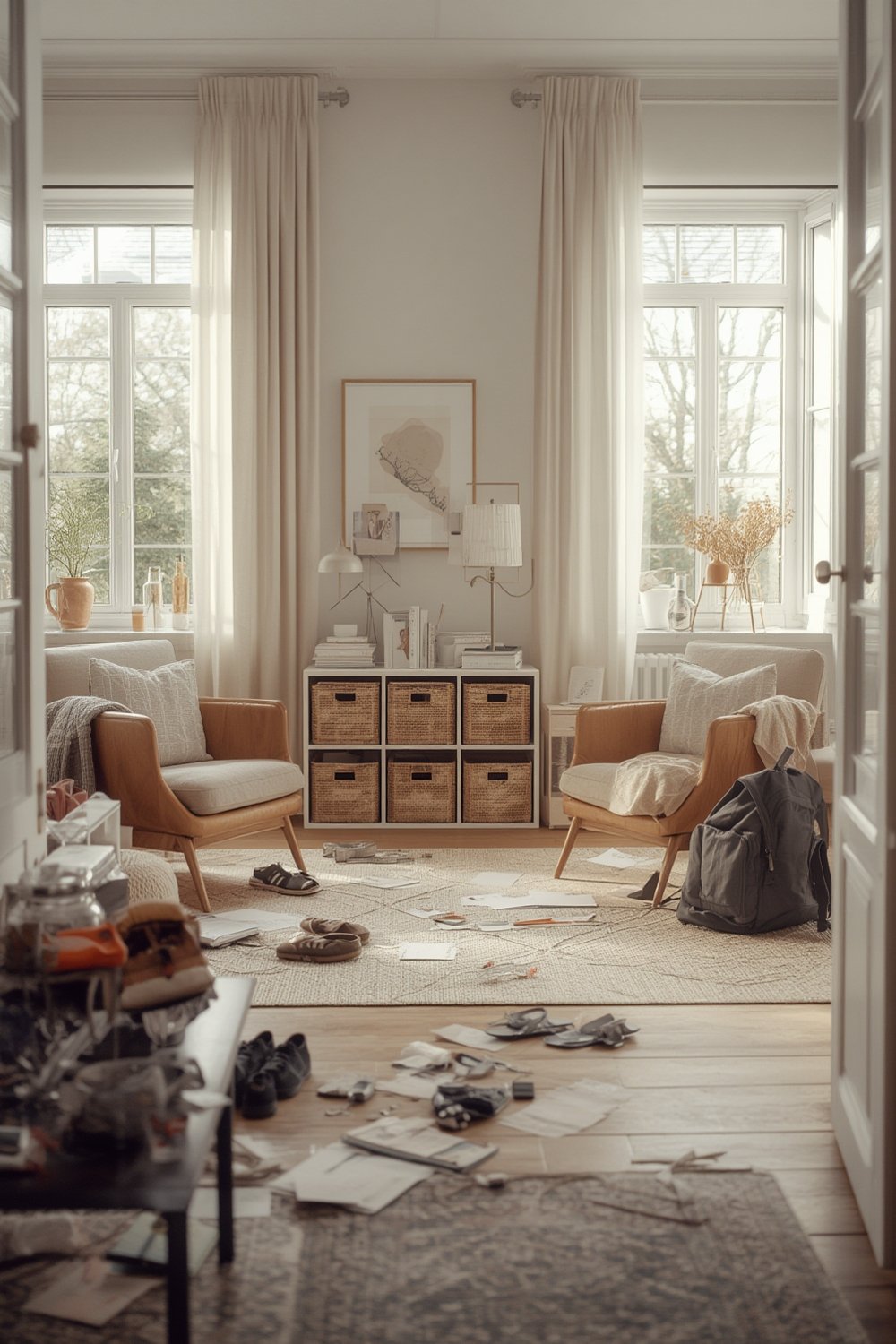
If you’ve ever tried typical organizing systems that promise “a place for everything,” you’ve likely noticed they break down quickly for ADHD brains. The reason? ADHD brings real executive function challenges—difficulty starting tasks, unreliable working memory, and getting distracted mid-way. These hurdles make traditional methods (which depend on habits, recall, and step-by-step processes) nearly impossible to sustain.
Any system that works for ADHD must minimize steps, be easy to reset, require very little memory or planning, stay visible, and not punish you for drifting off task. In fact, most executive function organization tools that help ADHD adults emphasize reducing friction and making storage visual, not hidden away.
Research findings note: The search results do not contain statistical data on success rates comparing ADHD-specific organization systems versus traditional methods.
What the research actually says — and what’s missing (evidence gaps)
If you’re searching for “what is the evidence-backed, best ADHD home organization system?” you’ll hit a wall. Here’s what’s notably missing from the research and available articles:
- No published success-rate comparisons between ADHD-specific and “normal” organization systems.
- No credible survey findings documenting complaints or satisfaction among ADHD adults.
- No detailed cost breakdowns with product recommendations specifically for ADHD-friendly setup.
- No research directly linking ADHD executive function limitations to decluttering obstacles.
- No user feedback studies or in-depth expert reviews on ADHD product design compatibility.
Why does this matter? Because most recommendations you’ll find—including those here—are best-practice extrapolations and practitioner insights, not clinical consensus. Any “perfect” system claim should be viewed skeptically. Choose what you can actually see yourself using, not what looks best.
Source: The search results do not contain: statistical data on success rates, survey findings, comparative analysis, scientific evidence, cost breakdowns, research on executive function, or user feedback.
Cost reality — how much to plan for (real numbers from available sources)
Let’s talk numbers. If you’re budget-conscious, this section’s for you. Professional organizers typically charge $50 to $200+ per hour, with first sessions or consults usually running $300 to $800. Larger projects often total $500 to $1,000, according to Fixr’s cost guide and market data from leading organizing services.
Virtual help is often much cheaper—$100 to $300 for remote consultation packages, as cited at Livable Spaces. Many people save hundreds by mixing some paid advice with $30 to $100 of DIY gear (bins, labels, wall hooks).
The takeaway: Simple organization for ADHD adults doesn’t have to be expensive. Start small—most find that DIY kits (<$100) or a couple of hours of virtual help give enough structure to reduce overwhelm.
Source: Professional organizer rates, initial consults, and client spend—So Simple Organization.
Core principles of ADHD-friendly storage systems (what to prioritize)
No one system works for every ADHD adult, but most sustainable ADHD friendly storage systems share these core traits:
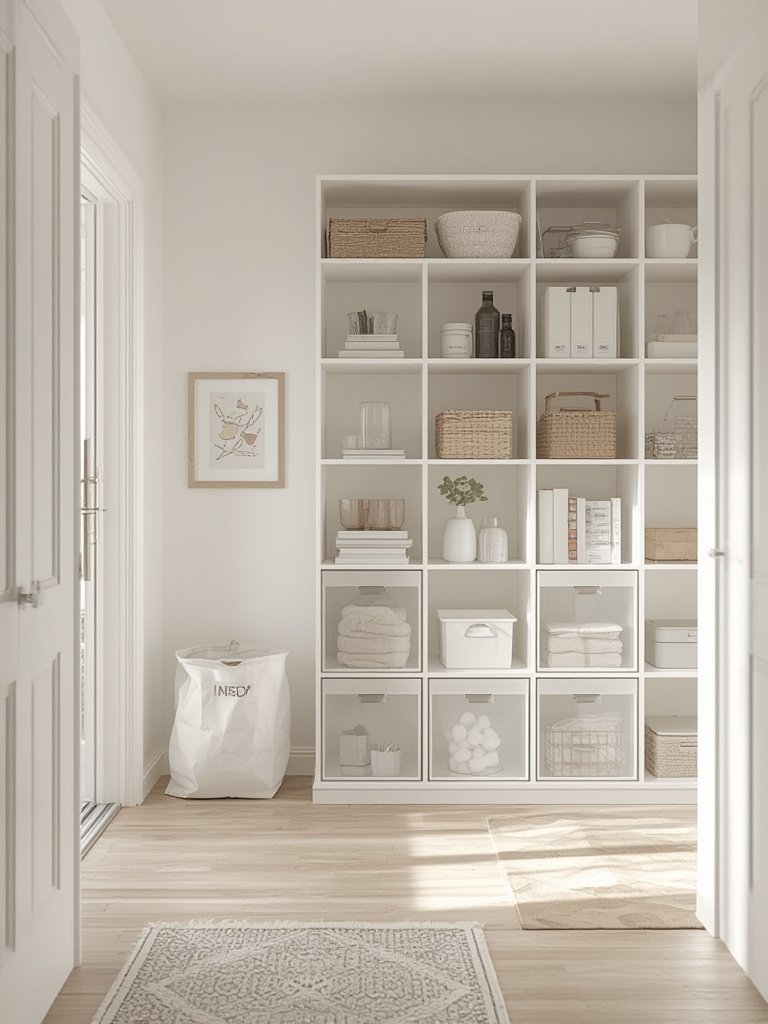
- Visual overview: Use open bins, shelves, or see-through containers so items are always visible (out of sight usually means out of mind for ADHD brains).
- Single-purpose containers: One simple bin = one straightforward purpose. “This is the mail bin.” “This is the keys tray.”
- Low-friction access: If it takes more than a single step (lift lid, pull drawer, dig), it will often be skipped. Favor drop-and-go setups.
- Obvious, memorable homes: Label everything. Place the bins close to where tasks happen (mail near front door, baskets in living room, etc).
- Temporal cueing: Use routines tied to time blocks (like a 30-minute daily reset at the end of the day) so maintenance becomes automatic, not forgotten.
Note: The search results do not contain scientific evidence or expert consensus on visual storage systems for ADHD brains. These are practitioner best-practices based on observed effectiveness.
Explore more smart storage solutions on our detailed resource, Smart Home Organization Tips: 7 Proven Ideas for 2026.
Common user pain points — what ADHD adults often say (and what we couldn’t confirm)
Based on organizing professionals’ experience, here are the most common pain points (bearing in mind there’s very little published survey data):
- Maintenance: “I can set up a system, but I can’t keep up with it over time.”
- Complexity: “Too many steps, categories, or sorting rules, and I stop using it.”
- Hidden/closed storage: “If I can’t see it, I forget it exists or forget what to do with it.”
- Executive effort: “If keeping up requires lots of decision-making, motivation, or memory, it doesn’t happen.”
Important: Decluttering for ADHD brains requires ongoing adjustment. What works for a month may break down later—and that’s normal. There’s little formal research on documented complaints, so treat these as working hypotheses supported by practitioner anecdotes.
See our full rundown of effective decluttering tools in our Best Small Kitchen Storage Organizers (2026 Guide)—many principles (visible, low-friction, single-purpose) apply beyond the kitchen.
Simple setup plan & average cost breakdown (step-by-step, budget and mid-range options)
- Pick one 30-minute zone (entryway, desk, kitchen counter, etc.).
- Buy three visible bins or trays (clear plastic, wire, or open baskets). Label for keys, mail, and “stuff to do” or similar categories.
- Use any flat surface for an “inbox” container in each room you frequently use.
- Hang or place one donation bag or box somewhere easy to access—make discarding items frictionless.
- Set a 30-minute timer and do a daily reset: return items to their labeled homes, empty inboxes, start with surface-level tidying.
Budget options:
- DIY: $30–$100 (basic bins, labels, large zip bags or baskets from Jumbo Bags: Best Storage Solution).
- Virtual organizer: $100–$300 for remote support and planning (see example here).
- On-site pro sessions: Typically $300–$1,000+ for hands-on help (market rate here).
For more actionable kitchen-based organization ideas, see Best Kitchen Organization Solutions (2 Smart Picks) and How to Organize Your Kitchen Like a Pro.
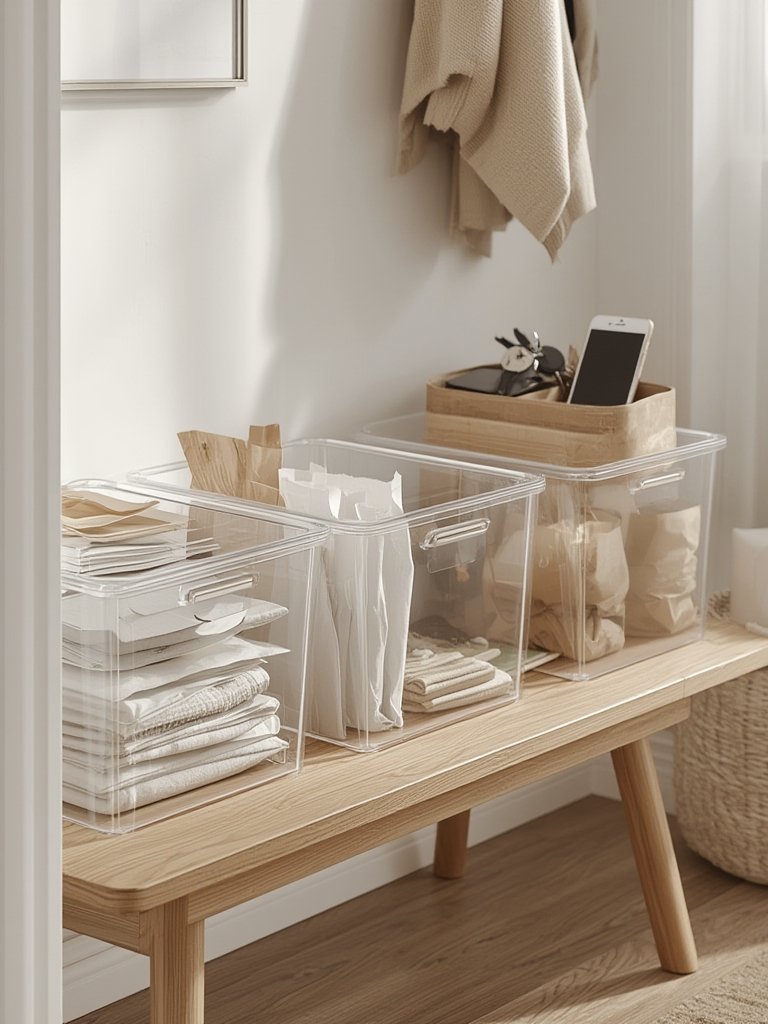
Mid-range budgets allow for more specialized bins (see-through deli containers from our Deli Containers review) or modular rack systems, but you don’t need to spend much to see benefits.
Executive-function barriers and how ADHD-targeted systems differ
Here’s what gets in the way for ADHD adults and how executive function organization tools can outsmart these barriers:
| Executive Function Barrier | Common Problem | Design Fix |
|---|---|---|
| Task Initiation | Never start tidying or sorting because it feels overwhelming. | Break down to micro-tasks (Start timer for 10 minutes instead of trying to finish everything). |
| Working Memory | Forget where things go or lose track of routines. | Label every bin and put reminder cards or checklists in the open. |
| Sustained Attention | Lose focus mid-way, end up with half-finished projects. | Have “done for now” trays where unfinished stuff can live visibly until later. |
| Planning | Can’t recall the steps for resets or maintenance. | Build routines into visible daily checklists and calendar reminders. |
Note: The research findings indicate that fully comprehensive answers require peer-reviewed studies on ADHD executive function and spatial organization, which were not included in the search results.
Want more low-friction resetting strategies? Check out Smart Home Organization Tips: 7 Proven Ideas for 2026.
Features and product design flaws to avoid
Some products make things harder for ADHD adults. Here’s what not to buy for ADHD friendly storage systems:
- Small, multi-compartment organizers without clear labels—hard to remember where things go, too fiddly.
- Opaque bins or closed cabinets in main living areas—if you can’t see contents, items tend to be forgotten.
- Systems that require step-by-step sorting before storing—too much cognitive effort to maintain, often abandoned fast.
- Storage that is not near the point-of-use—if a bin’s in the next room, clutter never makes it off the surface.
Seek out open baskets, single-purpose trays, and clear or wire containers. Adapt as needed—what’s visible (and easy to dump items in) is almost always more ADHD friendly. The search results do not contain user feedback or expert reviews analyzing product design compatibility with ADHD needs, so weigh these through common sense and your experience.
Explore practical organizer picks and food-safe containers in Glass Containers: 9 Ultimate Steps For Best Food Storage.
Underexplored content gaps competitors miss (opportunities for this article)
Most articles on ADHD home organization system repeat the same basic tips without addressing these important areas:
- Calling out evidence gaps transparently: Few guides admit where claims are best-practice versus research-backed.
- Step-by-step, DIY visual systems with time-limited protocols: Breaking things down into single-zone, 30-minute resets isn’t discussed enough.
- Maintenance matched to ADHD rhythms: Micro-habits and short daily “reset” routines (vs. big cleanups) are rarely explained.
Competitors also rarely do a comparative analysis of cost tiers, or acknowledge the reality that personalized “decluttering for ADHD brains” is more about lowering friction than following trends.
If you want to make kitchen chaos manageable, see our Top Kitchen Countertop Organization Ideas 2026.
Quick checklist & recommended next steps for the reader
- Pick your first 30-minute zone to tackle (desk, entryway, kitchen counter).
- Buy or repurpose three visible bins/trays and label each with its exact job.
- Create a five-item “micro-task” list: quick tasks (like emptying inbox bin, taking donations out, sorting mail, etc.).
- Decide now: DIY (under $100), virtual organizer ($100–$300), or pro in-person ($300+)? Factor in ongoing support you might want.
- Set a daily reset alarm—30 minutes max. It’s okay if you don’t finish—partial progress is still progress.
Remember: Simple organization for ADHD adults costs less with visible, open storage, daily resets, and systems that match your routines. Virtual organizing tends to cost less than on-site (usually $100–$300 vs. $300–$1,000+); rates commonly $50–$200+ an hour, per available market data.
Conclusion
There’s no magic fix, but creating a highly usable, visual ADHD home organization system is absolutely possible—without blowing your budget or sanity. Focus on open containers, labeled zones, and micro-routines. Accept that trial and error is part of the process, since all brains (and households) are different. Most importantly, choose changes you can see yourself keeping up with, not just what looks nice in photos. Ready to start? Pick your first zone, grab a bin, and make the first small change today—future you will thank you.
Building a sustainable ADHD home organization system that actually lasts
Creating an effective ADHD home organization system isn’t about perfection — it’s about reducing friction. The most successful setups are simple, visible, and easy to reset in under five minutes.
A practical ADHD home organization system should prioritize open storage, labeled zones, and one-task containers. When everything has a clearly defined home, ADHD adults spend less mental energy deciding where things go.
Another key principle of a long-term ADHD home organization system is visual clarity. Closed cabinets and hidden bins often fail because “out of sight” becomes “out of mind.” Transparent containers and open shelving make maintenance automatic.
If you’re rebuilding your space, start small. Test one area (desk, entryway, kitchen counter) and refine your ADHD home organization system before expanding it to the rest of your home.
The goal of any sustainable ADHD home organization system is not aesthetic perfection — it’s consistency. When the system works with executive function challenges instead of fighting them, clutter decreases naturally over time.
ADHD home organization system maintenance rule
A successful ADHD home organization system must be easy to reset daily. If your ADHD home organization system requires more than one step to maintain, simplify it immediately. The best ADHD home organization system is the one you can repeat consistently.
FAQ
Are there any proven ADHD home organization systems?
No system is scientifically proven better than another for ADHD home organization. Most expert suggestions are based on professional experience, not published studies. Prioritize systems that are easy, visual, and low maintenance.
How much does it cost to get organized with professional help?
Professional organizers charge $50–$200+ per hour, with initial consults/services running $300–$800. Many ADHD clients spend $500–$1,000. Virtual organizing costs less—usually $100–$300 for a package.
What’s the fastest low-cost action I can take right now?
Pick one problem zone, buy or repurpose three open bins, label them for “stuff to do,” “mail/keys,” and “donate/trash,” and set a 30-minute daily reset timer. You can do this for under $100.
Is it worth hiring a pro organizer for ADHD?
If you’re overwhelmed, a session or two with a pro (virtual or in-person) can break the deadlock and set you up for easier maintenance. Many ADHD adults combine occasional professional help with lots of DIY tweaks to keep costs down.
How is “simple organization for ADHD adults” different from mainstream advice?
It focuses on reducing steps, using open/visible bins, and building in reminders. Instead of complex sorting and closed storage, everything aims for quick resets and very little cognitive load.
[…] further professional organization inspiration, you might enjoy our Smart Home Organization Tips or Best Kitchen Organization Solutions—many layout principles apply directly to full-garage […]