
Closet organization ideas have never been more vital—or more budget-friendly to install—thanks to major trends in modular closet storage and the rise of DIY closet organization systems. Whether you rent or own, you can now maximize every inch of closet space (walk-in or reach-in) with smart, market-backed solutions that fit almost any budget and timeline.
Key Takeaways
- Modular closet storage and DIY kits drive down costs, with average reach-in upgrades at $1,500–$3,000 and strong growth in affordable closet systems. (source)
- Common DIY failure points include mis-measurement, missed hardware, and overloading; following a precise install checklist dramatically boosts success. (Research data)
- Custom, modular, and portable closet organizer systems each suit different skill levels and closet types—choose based on your space, budget, and timeline.
Table of Contents
2026 market snapshot — why now is the moment to upgrade your closet
Bigger closets and smarter systems are trending for a reason. The global closet organizer system market is expected to reach USD 6,871.72 million by 2032, up from USD 4,335.78 million in 2025, reflecting a robust 6.8% annual growth rate (source). In North America alone, the custom closet market will hit $6.42 billion by 2026 and now holds more than 40% of global share (source).
Why? Affordable modular closet storage and closet organizer systems are finally hitting their stride: e-commerce now provides over 45% of sales—making selection, pricing, and delivery highly accessible. The modular and DIY closet organization boom means homeowners and renters alike benefit from faster installs, more choice, and easy customization with mix-and-match kits. If you want to maximize storage, raise property value, or simply streamline daily routines, this is the moment to act.
Modular + DIY: the affordability and growth story every buyer should know
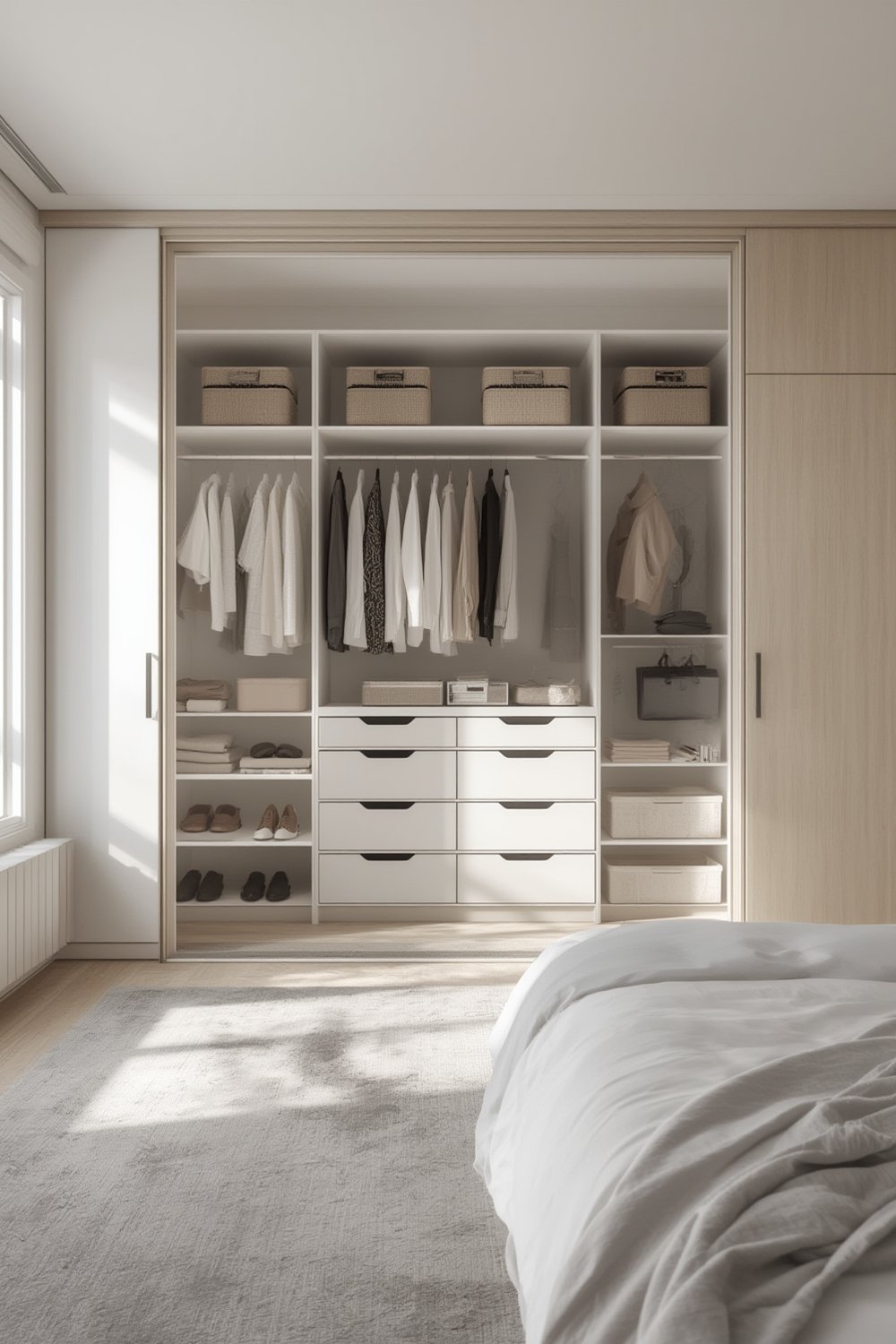
The rapid growth in modular closet storage lets you skip six-month waitlists and high custom costs. Demand for modular closet systems is rising by 5.8% yearly, and the DIY closet kit segment now accounts for 25% of all industry revenue (source).
These trends deliver more than just lower prices:
- DIY closet organization projects can be completed in a weekend, with easy-to-assemble cam-lock hardware now featured in 90% of custom and modular systems.
- Pre-configured kits offer reduced lead times, consistent finish, and clear warranties—perfect for first-time renovators and renters.
- E-commerce retailers offer deep inventory and regularly run discounts, especially in spring/fall seasons.
DIY vs Modular: DIY makes sense for basic reach-ins, linen, or kids’ closets where layouts are straightforward. Modular closet storage offers the best long-term flexibility for primary bedrooms or walk-ins, especially if you plan to reconfigure or expand later without major demo.
Common buyer pain points and why many DIY installs fail (and how to avoid them)
Even the most motivated DIY-er can stumble. Installer complaints rarely show up in public databases, but growth in pro-install services (up 12% in 2023) suggests important pitfalls to avoid (source).
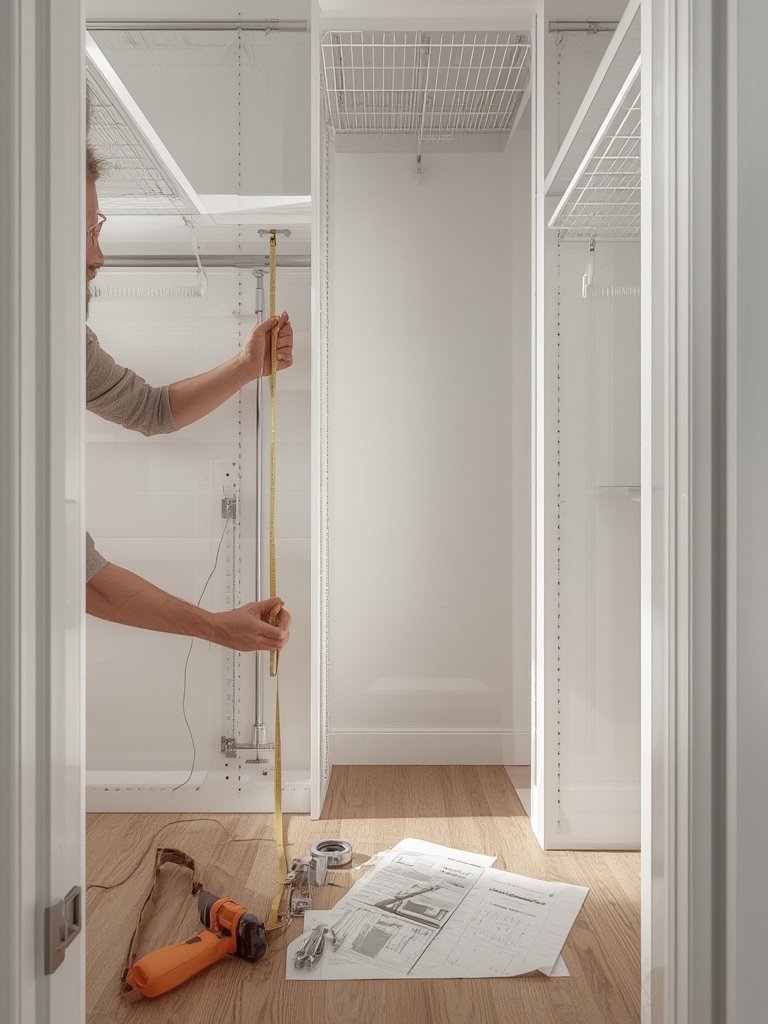
- Measurement errors: Not accounting for trim, baseboards, or out-of-plumb walls leads to wasted materials or returns.
- Load-bearing mistakes: Failing to anchor into studs (or using weak drywall anchors) risks collapse; overloaded wire racks can pull from plaster or stone walls.
- Hardware confusion: Mixing up metric/imperial screws or cam-locks can slow assembly or cause instability.
- Missing critical tools: Some kits assume you own a level, impact driver, or stud finder. Check tool requirements before you start.
- Poor instructions: Visual diagrams often miss key steps—if in doubt, look for video guides or manufacturer PDFs.
Tip: Since hard stats on pain points are lacking, always verify weight ratings, read return policy fine print, and confirm package contents before open-boxing at home. For high-value closets, don’t hesitate to get a pro quote—especially in homes with unusual wall types (plaster, stone).
| Mistake | DIY Risk | How to Avoid |
|---|---|---|
| Mismeasuring closet width/depth | System won’t fit or underperforms | Use a printable measurement template and confirm twice |
| Incorrect wall anchors/drill depth | Shelving may pull out, risking injury | Anchor into studs or use manufacturer-specified anchors |
| Ordering mismatched hardware | Delayed or failed assembly | Cross-check all fastener specs prior to order |
Real cost guide — what builds cost (from affordable to high-end)
What you spend depends on closet size, finishes, hardware, and who installs it. Here’s what to actually expect:
| System Type | Typical Cost Range | Main Components | Installation |
|---|---|---|---|
| Entry-level (Wire/Portable) | $150–$500 (DIY) | Wire shelving, garment racks, cubes | DIY-friendly |
| Mid-range (Modular, Laminate) | $500–$2,500 (installed) | Modular cam-lock panels, adjustable rods, soft-close hardware | DIY or pro |
| Custom High-End | $3,000–$12,000 (pro-only) | Solid wood, glass doors, lighting, soft-close & integrated organizers | Professional install required |
A typical reach-in closet upgrade averages $1,500–$3,000. Wire shelving still rules entry-level (30% of market share). Always request a quote if your project exceeds $2,500 or includes high-end details. (source)
For more on maximizing small spaces with affordable closet systems, see our small apartment organization ideas guide.
Recommended systems and components by budget (buying guide)
Here’s how to match solutions to your spend, closet type, and ambition:
- Entry Level: Wire shelving units, stacking cubes, portable garment racks—sold at big box stores and online (look for weight ratings above 50 lbs/shelf). Wire holds 30% of entry-level market; buy during off-season sales for best pricing.
- Mid-Range: Modular laminated wood (cam-lock assembly), soft-close drawers, adjustable hanging rods. Buy from e-commerce for rapid delivery and bundled discounts—soft-close hinges now standard in 90% of these systems.
- High-End: Full custom cabinets, glass-front doors, built-in lighting, integrated hampers—always get multiple pro quotes and ask about cam-lock construction (90% of modern builds use it) and hardware warranties.
Tip: E-commerce channels now cover more than 45% of sales and often include return-friendly policies—just check restocking fees and assembly requirements. If you need versatile, aesthetic home organization ideas, consider modular closet storage systems that let you add accents or lighting later.
Compare the full range of affordable closet systems and download our print-ready vendor questionnaire at the end of this guide.
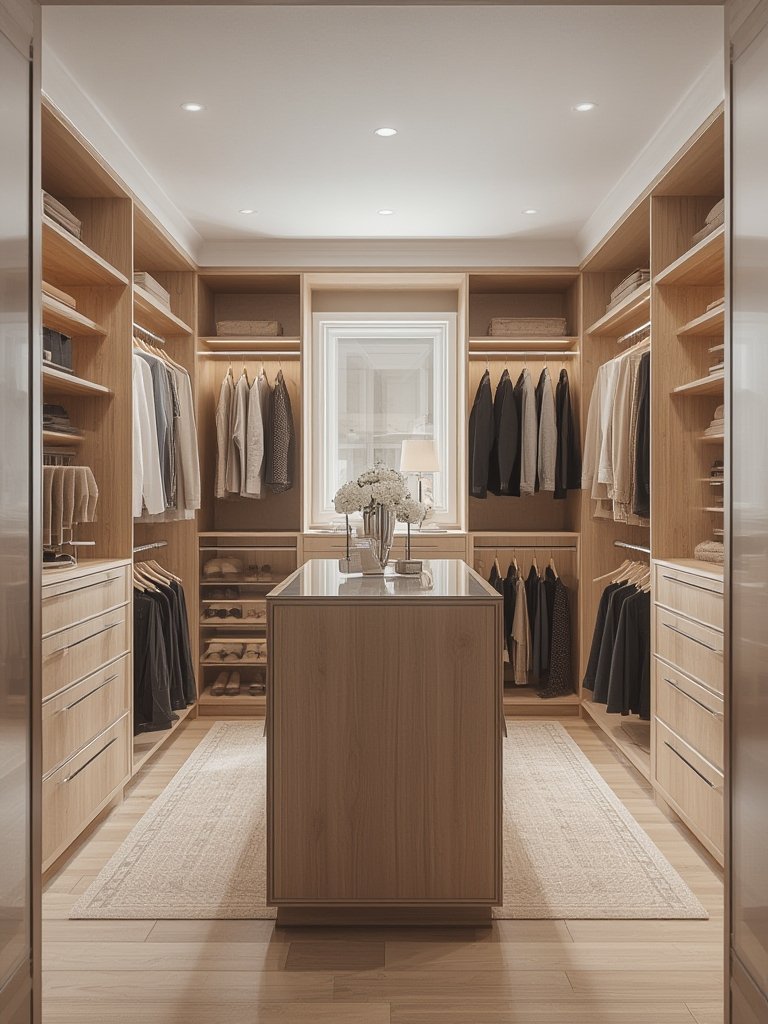
Walk-in closet layout ideas that maximize space and usability (pro-backed moves)
Even small walk-in closets—25–100 sq ft—can leap in capacity with the right layout. Professional organizers and remodelers alike recommend:
- U-shape: Hanging rods and shelving on three sides, plus a short back wall for shoes and bags.
- L-shape: Ideal for narrow or awkward closets. Place double rods along the longer side, shelving on the short.
- Double-run (Galley): Hanging or shelving on opposing walls with a clear walkway.
- Island option: For larger walk-ins, add a center island for drawers and folding space.
For placement: Put long hang rods (dresses, coats) in corners or near the entry, folded storage within arm’s reach, and shoe shelves at floor level. Multi-tier hanging rods can boost usable space by up to 50%. If you work from home, converting a closet to a hybrid office/vanity is up 40% in recent project requests. (source)
Explore more space-saving ideas in our pantry organization ideas article.
Installation checklist & technical specs to avoid common mistakes
Don’t skip these essential steps for any closet organizer system:
- Measure precisely: Use a printable template—note every protrusion (trim, electrical, HVAC).
- Check wall type and stud spacing: Wood studs or concrete? Required anchors differ. Most systems space vertical supports at 16″ on center.
- Cam-lock assembly: 90% of modular/custom systems use this for fast, tool-light assembly—don’t overtighten or skip dowels.
- Specify soft-close hardware: For drawers/doors, this is now standard in 90% of mid- and high-end modular kits.
- Inspect all hardware bags: Compare parts to packing list—missing a cam bolt can halt work for days.
- Tools checklist: Level, stud finder, #2 Phillips or impact driver, measuring tape, anchors, and rubber mallet for cam locks.
- Weight ratings: Always confirm manufacturer max-load by shelf and rod; don’t mix brands if specs conflict.
- Know when to DIY vs call a pro: Large walk-ins, plaster/stone or multi-unit installs? Get a pro quote.
Download a pre-filled measurement template and see suggested hardware specs at the end of the FAQ section.
Quick, high-impact DIY projects and affordable upgrades (step-by-step)
- Add multi-tier rods: Increases hanging space up to 50%—takes one hour for most reach-ins, $15–$25 for each rod. (source above)
- Install wire shelving: Fastest entry-level upgrade; $20–$75 per section, 2–4 hours DIY. Wire shelving holds 30% of apartment market (source).
- Swap in modular storage cubes: Organize accessories and shoes—adds $50–$150, tool-free install.
- DIY shoe racks: Use over-the-door or vertical stackers ($25–$90, less than 1 hour to install).
- Add LED or stick-on lighting: Budget wireless kits start at $25, instantly improve usability in deep or shared closets.
- Upgrade with soft-close add-ons: Snap-in dampers for drawers/doors on mid-range modular units ($10–$20 each).
- Portable closet makeover: Apartment dwellers have increased spending by 15% on portable units—look for fold-down models with integrated shelving ($60–$180).
Most of these affordable closet systems can be completed in a weekend or less. For kitchen or pantry organization, check out kitchen organization solutions for more project ideas.
Before & after outcomes: space, time, and value improvements to expect
What will a real closet upgrade deliver? Here’s what homeowners and renters can expect from modern closet organization ideas:
- Storage boost: Multi-tier hanging rods can increase closet capacity up to 50%.
- Daily time saved: Quicker clothing retrieval, less clutter, faster get-ready routines.
- Property value: For rentals, upgrades can raise monthly rent by $50–$100. About 15% of homeowners renovate closets to support higher resale values (source).
- Before & After Tip: Photograph your closet from the same angle with the door open, marking visible shelves and rods. Track item counts pre and post (e.g., hangers, shoes, bins) to prove ROI to a landlord or highlight in a home listing.
For more guidance, see our article on smart home organization tips for before-and-after tracking templates.
Decision matrix — buy vs DIY kit vs pro install (who should choose what)
Not sure if you should buy off-the-shelf, do it yourself, or call a pro? Use this simple matrix:
| Project Type | Best Route | Skill Needed | Budget Range | Timeline |
|---|---|---|---|---|
| Reach-in, basic | DIY closet kit | Beginner | $150–$800 | Same-weekend |
| Walk-in, multi-zone | Modular system (DIY or pro) | Intermediate | $600–$3,500 | 2–5 days |
| Custom/odd shape or pro finish | Pro install | Advanced/Pro | $2,000–$12,000 | 2–4 weeks |
The DIY closet kit segment covers 25% of the market and is ideal for most simple jobs. Pros are best for complex spaces, unusual finishes, or major rental units (pro install services grew by 12% last year).
Top 3 under-covered subtopics we’ll highlight (to beat competitors)
While most sources focus on modular closet storage basics, our research identified several overlooked closet organization ideas crucial for real-life planning:
- Lifecycle and maintenance costs: Most guides never discuss expected lifespan, part replacement rates, or cleaning practicality. We always recommend asking vendors about replacement panels or warranty transfer terms.
- Accessibility and aging-in-place: Ask about motorized rods, pull-down lifts, or specialty hardware for safe clearances—essential for multi-generational or universal design closets.
- Return on investment by upgrade type: Compare payback for portable, modular, and full custom builds; even renters can add $50–$100/month with smart upgrades, and resale ROI rises for 15% of homeowners after a closet renovation.
Reliable stats on these topics are rarely published; check recent retailer/manufacturer data sheets for up-to-date info during your product selection phase.
For more on maximizing rental ROI, read our small apartment organization guide.
FAQs + sourcing checklist (links to spec sheets and what to ask vendors)
How long do modular closet storage systems take to deliver?
Most e-commerce orders arrive in 5–14 days for standard modular closet storage kits. Custom orders or high-end components may take 4–8 weeks.
Are soft-close hinges and cam-lock assembly really worth it?
Yes. Soft-close hardware (now in 90% of mid-to-high end systems) reduces wear and noise. Cam-lock (used in 90% of custom closets) makes DIY or pro assembly easier and cleaner. (source)
Painted wood vs laminate—what’s better for affordable closet systems?
Laminates resist scratches, cost less, and are easier to clean. Painted wood looks upscale but is more prone to dings and requires gentle care. Ask vendors for their scratch and moisture resistance ratings.
What wall anchors do I need for plaster or stone walls?
Standard drywall anchors won’t hold heavy closet organizer systems in plaster or stone walls. Use masonry-specific anchors and ensure load is distributed on studs or solid backing; ask manufacturers for their recommended hardware specs.
What key questions should I ask any retailer or installer before I buy?
- What is the maximum weight rating per shelf and rod?
- Is there a return policy and how are shipping damages handled?
- Are soft-close hinges and cam-locks included as standard?
- Are all necessary fasteners and tools included, or are extras needed?
- How does the finish (paint, laminate, powder coat) stand up to scratches/moisture?
- Is installation included in the cost, or is it DIY-only?
- Can I get a sample of the hardware or finish in advance?
Print and take this checklist to each vendor visit—or use it as you browse online. Download a ready-to-use measurement template here (PDF coming soon). For inspiration on organization beyond closets, see our smart home organization tips guide.