


Home reset routine is the single best way to keep a busy house organized—without spending all week picking up after everyone or feeling like you live in an endless cleaning cycle. If your weekdays are slammed and you want one session a week (or a flexible plan to split up), this is your practical blueprint. No fluff. Real data, real time-savers, and a free printable checklist at the end.
Key Takeaways
- A realistic weekly home reset routine saves stress and time compared to constant reactive cleaning.
- Most busy households can complete a full weekly reset in 2–2.5 hours—or split the work over the week if needed.
- Tools like robot vacuums and printable checklists make sticking to your home reset routine much easier.
Table of Contents
Why a weekly home reset routine matters
Most American households spend a surprising six hours a week cleaning—but the difference isn’t just how much you clean, it’s how you structure it. A realistic reset routine gives you a fixed, predictable window for essential tasks. Instead of chasing messes or running out of energy after work, you get a reset point that actually keeps living spaces under control—for adults, for kids, and yes, for pets too.
In one documented family example, a weekly reset took their household from feeling chronically behind to finishing “must-do” tasks in 2–2.5 hours. That’s less than half the average total weekly cleaning time—and far less overwhelming than endless reactive laundry, clutter, and kitchen chaos.
Weekly resets cut down decision fatigue, give busy families a reliable household rhythm, and help you spot recurring trouble zones before they spiral. The result: less chaos, less downtime, and a home that stays functionally organized—even when everyone is at their busiest.

Step-by-step guide: Build your weekly home reset routine
The secret to an effective home reset routine? Prioritize, batch, and flex. Here’s exactly how to do it—even if you’ve failed at sticking to routines before.
1. Decide: Single session or split session?
If you have a mostly free block (Friday, Sunday, or an evening), aim for the entire reset in 2–2.5 hours. If not, split the routine: batch kitchen cleanup and bathrooms on Sunday, then bedrooms and laundry midweek. This “split plus core” method works when everyone’s schedule is packed.
2. Gather your tools & supplies
- Essential cleaning kit: vacuum (robot, if you have one), microfiber cloths, all-purpose cleaner, laundry detergent, extra trash bags.
- Optional helpers: Labeled bins for fast toy/gear pickup, bathroom caddy, drawer dividers, over-the-door hooks.
- Time-savers: If you’re considering a robot vacuum, 30.4% of busy American households use one weekly—see this report for stats.
3. Download or print a checklist
Write your main priorities—see the proven templates below, or download our free twenty-minute split-checklist or full weekly cleaning plan printable at the end. This approach was highly rated for reducing mental effort and keeping everyone on task.
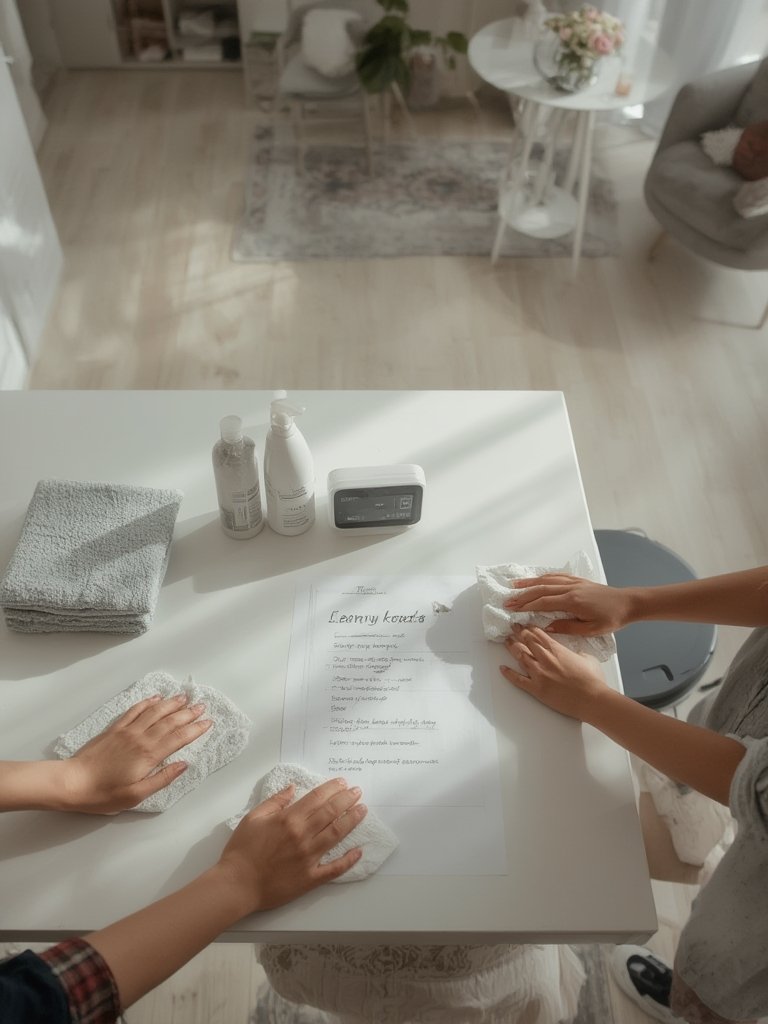
4. Do the reset (essential tier, ~2–2.5 hours):
- Start laundry (towels, sheets, any uniforms/sports gear)
- Run robot vacuum or regular vacuum (focus on high-use paths, living room, bedrooms)
- Quickly tidy bedrooms (make beds, gather clothes, wipe surfaces)
- Full clean bathrooms (mirrors, counters, sink, tub/shower, toilet, replace towels, refill soap)
- Kitchen counters and main surfaces (wipe down, run dishwasher, empty trash)
Optional/”Nice to do” if time: Mop floors, quick spot-clean walls/doors, organize entryway bins, vacuum under furniture.
5. Split-session example:
- 10–20 min/day core: quick clear kitchen counters, sort mail/clutter spots, wipe bathroom counters
- One longer weekly block (40–60 min) for vacuuming, laundry, bathroom deep clean, and sheet-towel changes
- Bonus: Sunday reset cleaning routine is ideal for prepping the house before a new week
You can always flex or swap smaller “must-do” tasks to match your busiest days. The key is setting limits and avoiding perfectionism.
Sample checklist (family, single, couple):
- Single adult: 45–75 min. Focus on bedroom, bath, kitchen. One laundry load, floors, high-touch surfaces.
- Couple: 1–1.5 hours. Divide vacuuming, split bathroom and kitchen. Batch laundry.
- Family with kids/pets: 2–2.5+ hours. One person on laundry, one on bathrooms, one on bedrooms/living. Delegate kid chores.
Want long-term results for kitchens? See these kitchen organization solutions and pro kitchen organization tips—they complement any reset plan.
Advanced analysis & common pitfalls
Even the best weekly home reset checklist will hit snags in real life. Here’s a look at the real barriers people report (and how to solve them):
| Barrier | % of Users | Solution/Workaround |
|---|---|---|
| Low motivation or energy | 33.3% | Automate (robot vacuums), use micro-deadlines, pair with music; allow “skip” rules if burnt out |
| Lack of time | 15.6% | Split checklist over days or delegate core zones to family, use printable kid chore charts |
| Reset too intense in one day | Not quantified | Choose split home organization schedule, aim for weekend “reset” or mix daily plus deep weekly |
| Routine doesn’t fit lifestyle (kids, pets, shift work) | Common in young families | Customize timing, adjust for soccer/practice, and use fast daily spot-cleans; see printable for custom timing |
Citations: US cleaning stats, Apartment Therapy weekly reset review
Remember, 27.6% of users prefer a room-a-day approach, especially in homes with kids and pets. If you try a single block and hate it, don’t power through—pivot to a split session without guilt.
See these smart home organization tips for additional habit-forming tweaks. For small-space and apartment hacks, try small apartment organizing.

Conclusion: Try a home reset routine (with printable)
The most effective home reset routine is both realistic and flexible—never rigid or overwhelming. Most busy families can maintain a baseline home organization schedule with two to two-and-a-half hours per week, or split over several days for less intensity. Customize your printable checklist, use tools that fit your budget (robot vacuums save time, but a simple timer works too), and delegate wherever possible.
Ready to test a weekly home reset routine? Download our free printable checklist below, try a four-week challenge, and tweak your approach based on stress level and family feedback. There’s no one-size-fits-all, but this framework makes home resets actually doable for real-life schedules.
Looking for more ways to streamline your kitchen or living space? See these trusted resources for small kitchen storage organizers, aesthetic home organization ideas, and more.
Grab your printable, set your time, and let your next reset routine start working for you.
FAQ
What if I don’t have a 2-hour block free for the weekly reset?
Try the split-session method: do a 10–20-minute “core” reset daily and one longer block when you can. The printable includes both formats.
How do I get kids or roommates involved?
Use the printable kid/roommate chore chart. Delegate age-appropriate tasks, make roles clear, and keep it short to avoid battles.
Is Sunday really the best day for a home reset?
Any day works—Sunday reset cleaning routines are popular because people prep for the week, but Friday or midweek can be just as good. Pick what matches your energy and schedule.
What cleaning tools are worth buying to make a reset faster?
Robot vacuums and microfiber cloths are proven time-savers. Labeled bins/drawer dividers help keep things organized between sessions. Traditional vacuums still work well for deep cleaning.
Can I skip tasks without ruining the routine?
Absolutely. The best realistic reset routine is flexible—if a room doesn’t need cleaning this week, mark it “skip” and move on.

[…] families face unique cleaning challenges that make maintaining a tidy home particularly difficult. Average US households spend 6 hours weekly on cleaning tasks, while busy parents invest even more time managing household tidiness. […]