

Looking for fast and effective kitchen drawer organization ideas that actually fit your kitchen, your life, and your budget? This guide ditches generic tips and instead offers clear steps to help you compare, choose, and install the best drawer organizers—so you can say goodbye to clutter and hello to a kitchen you’ll love showing off.
Key Takeaways
- The U.S. kitchen organizers market is booming (8.8% CAGR, 2024–2025), with a surge in customizable products and buyer demand for functional aesthetics.
- Before buying, measure carefully, check material specs, and prioritize adjustable products for the best fit—especially with expandable drawer dividers and deep-drawer inserts.
- Smart, well-installed organizers directly enhance buyer appeal (integrated storage, cohesive finishes) and make your kitchen easier to sell or enjoy daily.
Table of Contents
Why now? Market signals that make drawer organization a smart buy
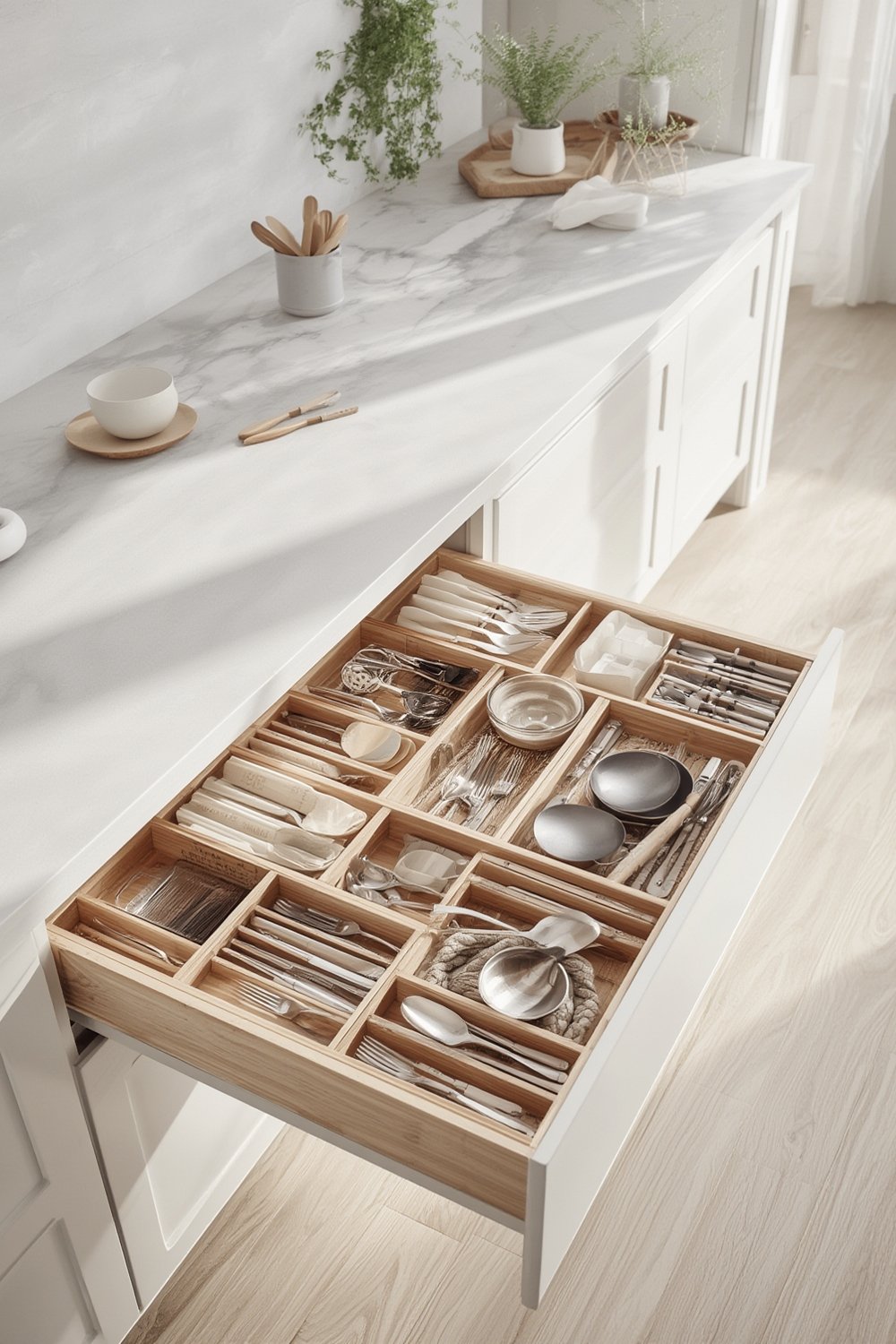
Kitchen drawer organization ideas aren’t just about tidying up—they’re a proven investment for homeowners and renters who want both daily function and future resale appeal. The U.S. kitchen organizers market is growing at an 8.8% CAGR through 2025 (source), and residential usage held about 68% market share in 2023 (source). Retailers are expanding their collections as buyers demand adjustable, custom-fit products. Manufacturers are rolling out new designs—especially expandable drawer dividers, premium deep inserts, and bamboo or wood or magnetic modular trays—making 2024–2025 a strong window for upgrades that blend aesthetics and practical ROI.
The evidence gap — what the research does and doesn’t prove
If you’re searching for data like “78% of homeowners improved efficiency by following kitchen drawer organization ideas,” you won’t find it. No 2024/2025 surveys directly report on efficiency increases tied to drawer organizers (source). What we know, based on industry research, is that more buyers are choosing better organization products for both their own experience and future sale value, driving a 6.0% CAGR for storage solutions (2024–2030). So, the smart move is to use best-practices—measurements, materials, and fit checks—gleaned from expert trends, not unproven statistics.
When you start, follow these actionable steps for success:
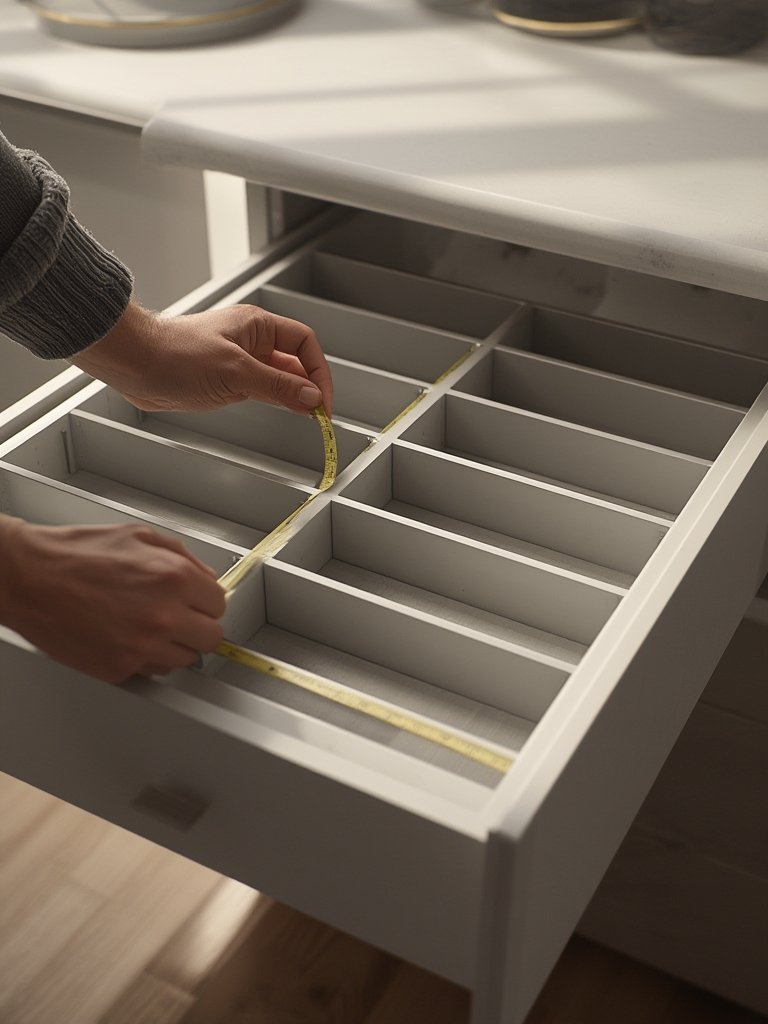
- Document every internal measurement—width, depth, height—and double-check for hinges or lips.
- Research product specs (not just “standard size” claims). Look for clear min-max ranges or adjustable options.
- Match material and finish—bamboo/wood for visible drawers, easy-clean plastic or steel for hidden or high-mess locations.
- Review mounting/installation needs—some organizers require tools or semi-permanent screws.
- Check load ratings (for deep-drawer inserts)—especially if you’ll store pots, lids, or ceramic items.
- Favor products with buyer-friendly return policies or fit guarantees.
- Document installation time and difficulty—factor in your DIY comfort level or installer fees for custom trays.
For more smart solutions on maximizing kitchen organization, see the Best Kitchen Organization Solutions guide.
Common buyer frustrations with expandable drawer dividers (and how to avoid them)
Expandable drawer dividers are popular but not perfect. Verified customer review data is scarce, but market research and vendor insights reveal five persistent pain points:
| Typical Problem | Cause | How to Avoid |
|---|---|---|
| Dividers won’t fit or stay snug | Mis-measurement; wrong size range | Measure drawer’s “usable” space (not just overall), check product range, read real install photos |
| Flimsy or bowing under load | Thin plastic/low-grade bamboo | Choose dividers with at least 0.5-inch thickness or reinforced ends for frequent use |
| Poor adjustability for gadgets | Limited locking positions | Seek “infinitely adjustable” or “zero-gap” designs, especially for utensil or gadget drawers |
| Difficult to install or remove | Stiff springs, tight tolerances, confusion over mounting | Read install instructions before buying, favor tool-free models if DIY-averse |
| No clear warranty or return info | Generic packaging or 3rd-party vendors | Always buy from return-friendly retailers and check user photos for product accuracy |
Quick reminder: Products with “infinite adjustability” score highest for both fit and satisfaction in 2025 kitchen trends. For more on professional kitchen organization strategies, don’t miss How to Organize Your Kitchen Like a Pro.
Trending utensil drawer organizers — the three innovations to prioritize
The utensil drawer organizer landscape is evolving fast. Three innovations dominate 2025’s market—and each serves different needs:
- Customizable magnetic-peg systems: Ideal for drawers storing mixed utensils, heavy pot lids, or odd-shaped gadgets. Magnetic bases and movable pegs let you reconfigure layouts as your storage needs evolve. Typically positioned by retailers as “future-proof” or “universal fit” (see recent examples in industry market reports).
- Vertical dividers and pull-out shelf systems: Best for deep drawers storing pans, tall bottles, or large spatulas. Allows upright storage for fast visibility and easy grabbing—especially in lower cabinets or extra-wide drawers.
- Bamboo/wood aesthetic organizers: Chosen for top drawers or any visible location where durability and appearance both matter. Natural materials complement modern kitchens and enhance resale or renter appeal.
No consistent price bands exist yet for these innovations (research findings), but IKEA-type solutions start at $5–6 and scale up based on material quality and size.
For setups in small kitchens, see the latest Best Small Kitchen Storage Organizers Guide.
Deep-drawer storage inserts — what specs buyers should demand (and why)
Deep-drawer storage inserts solve big messes, but only when you match specs to your real needs. Here’s your practical checklist:
- Internal drawer height (clearance): Measure from bottom to just under the lip. Allow at least 0.25-inch to avoid jammed drawers.
- Width and depth: Don’t trust exterior dimensions—always check internal space after accounting for any rails or joinery.
- Number and size of compartments: Do you want wide spaces for baking pans, narrow slots for lids, or sliding bins for snacks?
- Material and thickness: Seek inserts at least 0.5-inch thick in bamboo or heavy-duty plastics. Flimsy designs warp under daily use.
- Load-bearing rating: If storing heavy gear, check for 15–25 lbs minimum recommended capacity (if displayed).
- Hardware compatibility: Some inserts require specific drawer box styles or fixer kits—read product guidelines to avoid returns.
No specific size or weight standards exist in the latest research (Data Insights 2024). Always validate fit with a trial install before removing any packaging tabs. For more space-saving inserts and their pros/cons, explore Best Kitchen Cabinet Storage Organizers.
Custom drawer trays vs. off‑the‑shelf — cost and installation tradeoffs
Choosing between custom drawer trays and off-the-shelf organizers comes down to budget, your kitchen’s needs, and your appetite for DIY or professional install:
| Type | Pros | Cons | Best for |
|---|---|---|---|
| Custom Drawer Trays | Perfect fit, fully customizable, matches finishes, high buyer appeal | Higher cost, longer lead times, complex installation may require tools or a contractor | Major kitchen renovations, maximizing resale, unique/difficult drawer sizes |
| Off-the-Shelf Organizers | Affordable, fast delivery/install, easy to swap or upgrade | Fit may be imperfect, materials may not match existing cabinetry, limited layout choices | Quick upgrades, renters, budget remodels |
Still unsure? Ask your vendor or installer:
- What is the lead time for custom work? Any rush options?
- What finish and material options will best match your kitchen?
- How is installation handled for each? Are returns or modifications possible if the fit is wrong?
Market signals suggest the strongest growth in custom, premium options (6.0% CAGR, 2024–2030), which is echoed in industry research. For advice on making your organizer purchase smart for the long term, check out our Aesthetic Home Organization Guide.
Aesthetic drawer setups that boost buyer appeal (what real-estate experts say)
Today’s buyers want function and style—messy or mismatched storage can actually turn buyers away. The National Kitchen & Bath Association found that 87% of 2024 kitchen design experts rank integrated and decluttered storage as a top feature for improving a home’s buyer appeal (source).
- Integrated, pull-out drawers (especially in islands) are now in 80% of renovating homes (Houzz 2025 Study).
- Concealed storage—pull-out pantries and hidden utensil drawers—make kitchens look sleek and high-value.
- Cohesive materials and finishes boost “wow” factor in listing photos and real-life tours.
Want your kitchen to feel both modern and inviting? Choose organizers that match cabinetry tones, avoid clutter on counters, and show generous yet organized storage in every listing photo. To maximize buyer buzz, review Aesthetic Home Organization Ideas for real-life examples.
Transactional buying checklist & installation quick-guide (convert visitors into buyers)
Ready to buy? Here’s your fast checklist to avoid disappointment and wasted returns:
- Record exact internal drawer dimensions (width, depth, height—twice).
- Note material/finish for both the organizer and your current cabinetry.
- Check if your pick is expandable and note its adjustment range compared to your measurements.
- Review stated weight/load ratings (especially for deep drawer storage inserts).
- Check the mounting/install method—tool-free, adhesive, or screw-in.
- Only buy from retailers with warranty or fit guarantee policies.
- Ask for video or photo install guides.
- Estimate install time: tool-free dividers = 5 mins; custom trays = up to 1 hour with tools.
Quick-install tip: If an expandable drawer divider just won’t fit, use a soft felt pad or slip a thin rubber liner below to create grip, or switch to a modular system. If your deep drawer storage insert sags, try repositioning heavy items near corners where drawer walls support more weight.
For more inspiration on space maximization, find proven ideas in our Pantry Organization Ideas Guide.
Product & content gaps you should own (high-opportunity pages/features)
Based on top-ranking competitors, here are the three highest-impact ideas for new content or features around kitchen drawer organization ideas:
- Eco-smart product guides: Spotlight bamboo/sustainably sourced or even recycled-material organizers as alternatives to plastic. Few guides currently compare longevity and environmental impact.
- Specification-driven comparison matrices: Build sortable tables that compare dimensions, adjustability, materials, and fit guarantees across major brands—this is missing almost everywhere.
- Custom vs off-the-shelf cost/installation calculators: An interactive estimator widget lets buyers see real-world price and time impacts per drawer size/complexity.
To drive conversions, always include:
- Clear product specs (internal dimension match)
- A short install/warranty video
- Easy-to-find return/refund policy details
- Price bands or “best for” indications by budget/context
For more on filling competitor content gaps, review our guide on Smart Home Organization Tips.
Quick wireframe for a high-converting product/comparison page
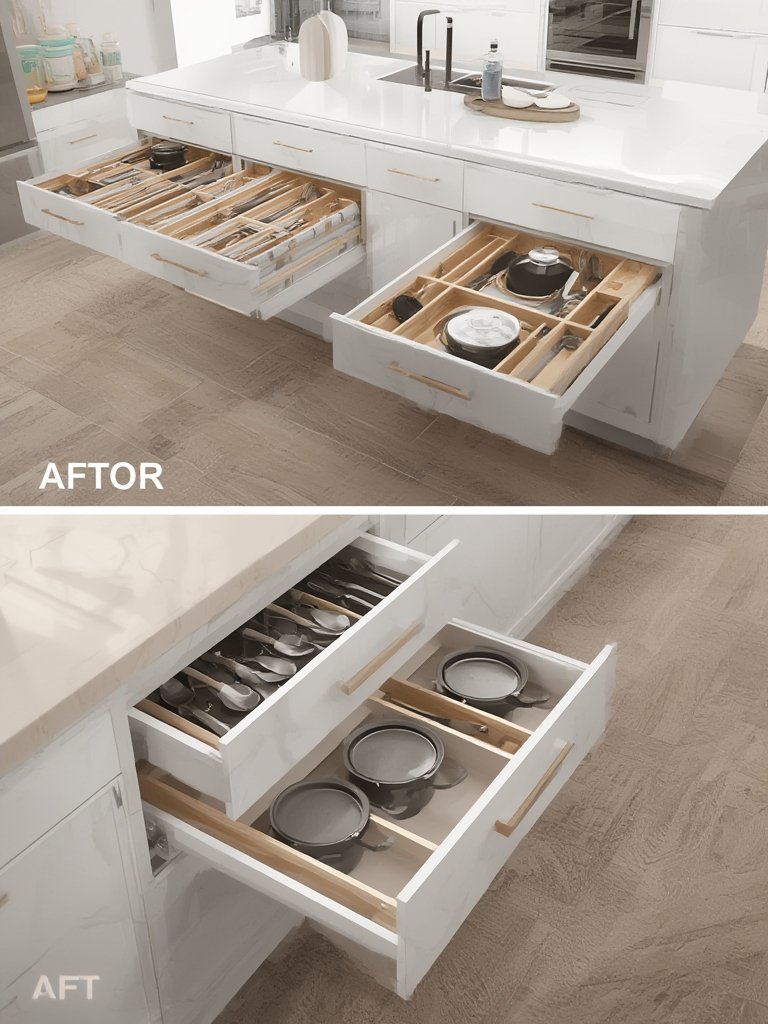
- Hero photo (before/after example) + price + simple fit guarantee line (“Guaranteed to fit or return it free”)
- Specs table—clear drawer-size compatibility, organizer dimensions, weight capacity, material, color options, and adjustment range
- Install video, ideally 60–90 seconds, embedded above the “Add to Cart” button
- Comparison slider: Quickly flip between similar utensil drawer organizer or custom drawer trays SKUs for side-by-side differences
- Customer Q&A focused on most common pain points—especially fit and durability
- Buy now button + easy upsell for an install kit or extended warranty
Why invest in this? U.S. kitchen organizers market growth shows a strong need for pages that anticipate buyer questions and eliminate friction—market projection is 8.8% CAGR with residential products at 68% share (industry report).
Short editorial briefs for three top-converting posts (to support product pages)
- “Measure & Match: How to pick expandable drawer dividers that always fit”
Key angle: Step-by-step measurement guide, top picks for every standard drawer width, quick install video. Target buyers who want a guaranteed-fit solution for their kitchen. - “Deep Drawer Solutions: Inserts that hold pans, lids and heavy gear”
Key angle: List recommended material specs, minimum thickness, and load-handling examples. Feature before/after photo sets and real usage scenarios with deep drawer storage inserts. - “Custom vs. Off-the-Shelf: Which pays off for your kitchen?”
Key angle: Walk through ballpark cost ranges for each approach (use crowd-sourced or vendor samples), install time breakdown, and resale/appeal tradeoffs. Embed a cost/calculator widget for real-life scenario planning.
None of these deep-dive angles are addressed on most first-page competitor guides (content gap). With the market expanding (CAGR 6.0%+), there’s real ROI in targeting buyers actively comparing expandable drawer dividers, deep drawer storage inserts, and custom drawer trays with this level of specificity.
Conclusion
Practical kitchen drawer organization ideas aren’t just about appearance—they make your kitchen easier to use, reduce friction in daily cooking, and boost value if you plan to sell or rent. The buying process is simple: measure first, pick specs and materials that suit your needs, prioritize adjustable fit, and favor clear-finish materials for aesthetics. For lasting satisfaction, always shop with retailers offering fit guarantees and easy returns. Ready to transform your kitchen? Start measuring today and choose a storage solution with long-term value—your next cook (and next buyer) will thank you.
FAQ
How can I make sure expandable drawer dividers will fit my drawer?
Measure your drawer’s internal width, depth, and height with a tape measure—never trust exterior box measurements. Compare these to both the minimum and maximum ranges advertised by the divider. When in doubt, choose dividers with a wide adjustment range or consider a modular tray system.
Are bamboo or wood utensil drawer organizers better than plastic?
Bamboo and wood organizers look more upscale in visible drawers and tend to be thicker and sturdier, but require gentle cleaning. Plastic options may be easier to wipe, lighter, and more budget-friendly—best for less-visible drawers or renters.
What if my deep drawer insert starts sagging under heavy pots?
Try shifting the heaviest items to corners nearest drawer walls, add felt pads or support blocks below, or look for inserts rated for higher weight load. If persistent, consider a professional or custom insert replacement.
Is it worth paying more for custom drawer trays over off-the-shelf?
Custom trays are best if your kitchen has unusual drawer dimensions or if you want a seamless, high-end look for resale. Off-the-shelf organizers work for most standard sizes and make sense for renters or lower-budget updates.
How do I boost home value with a new kitchen drawer organization system?
Choose cohesive, integrated organizers that match your cabinetry. Highlight “decluttered storage” in listing photos; real estate agents say these modern, integrated features boost buyer appeal even if they don’t raise home value directly.