
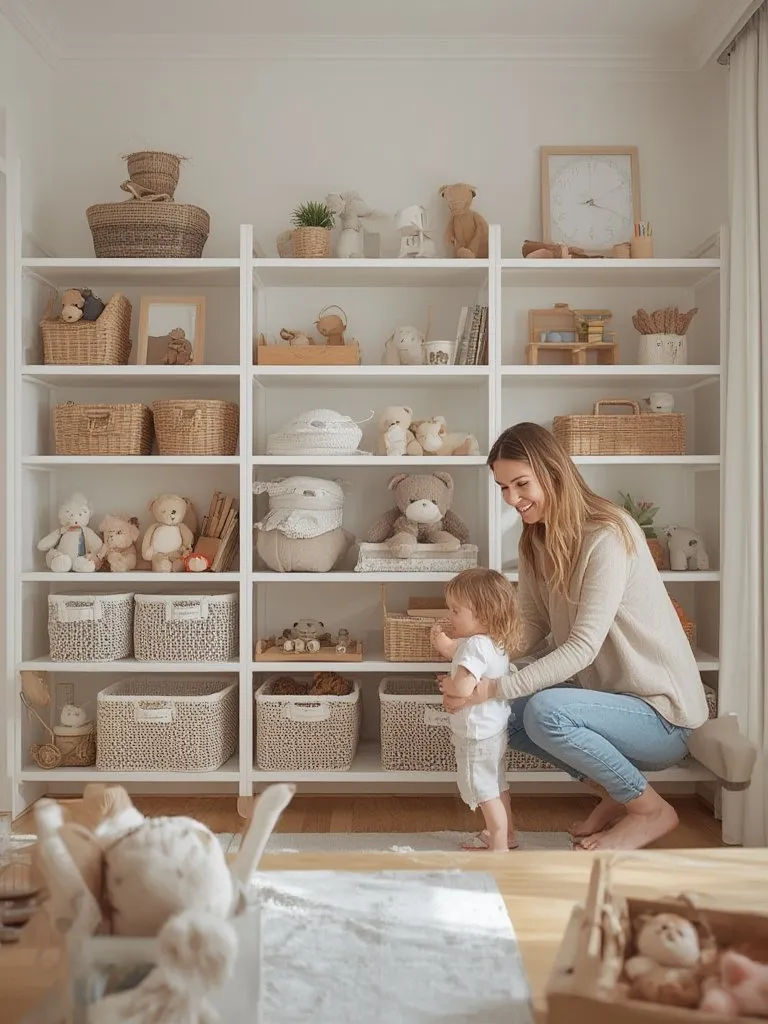
Toy organization ideas don’t just clear up your home—they unlock peace of mind, speed up cleanup, and help your child gain real independence this weekend. Whether you’re squeezed for space or want your living room back, the right kids room storage solutions inspired by Montessori principles (and a smart shopping guide) will deliver lasting results. Read on for practical moves, live product checklists, and real-world hacks to get you set up in one session.
Key Takeaways
- Montessori-boundary storage and open shelving make cleanup almost automatic—even for toddlers.
- Labeled bins aren’t magic: the right container depth, label design, and visibility are what drive kid participation and tidiness.
- Skip overwhelm: focus on feature-driven buying, since no reliable 2024 pricing data exists—our checklists and product picks show you what’s worth your money.
Table of Contents
Why focus on toy organization now (quick ROI for parents)
Implementing new toy organization ideas pays off immediately: you’ll see less clutter, faster cleanups, and—best of all—kids begin to put toys away without you. Modern kids room storage solutions aren’t just about making your home look better. They’re built to encourage independence, reduce friction at cleanup time, and eliminate visual chaos in living spaces shared by the whole family. This guide isn’t just inspirational. It shows which storage features actually matter so you know what (and what not) to buy.
Note: No up-to-date statistics exist on family spending for toy organization or kids storage in 2024–2026. Since credible research only offers feature- and principle-based recommendations, all product guidance here is based on hands-on experience and best practices, not specific average spend data.
Top real-world frustrations with labeled toy bins (and how to avoid them)
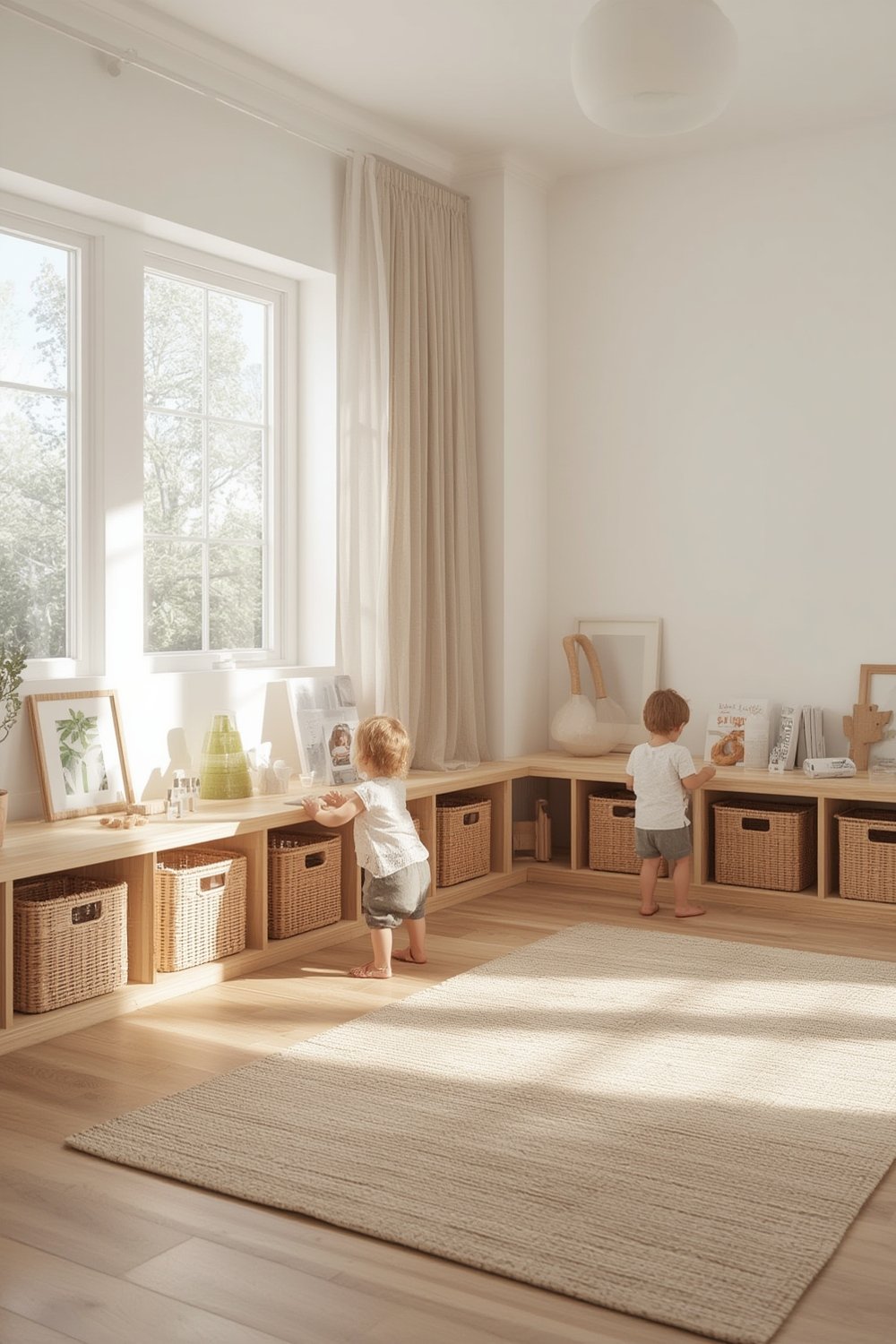
Most “toy storage bins with labels” look great online, but what happens in daily life? Here are common frustrations parents and caregivers run into—and effective ways to address each:
- Bins are too deep: Toys pile up, kids can’t see what’s inside, and items get lost.
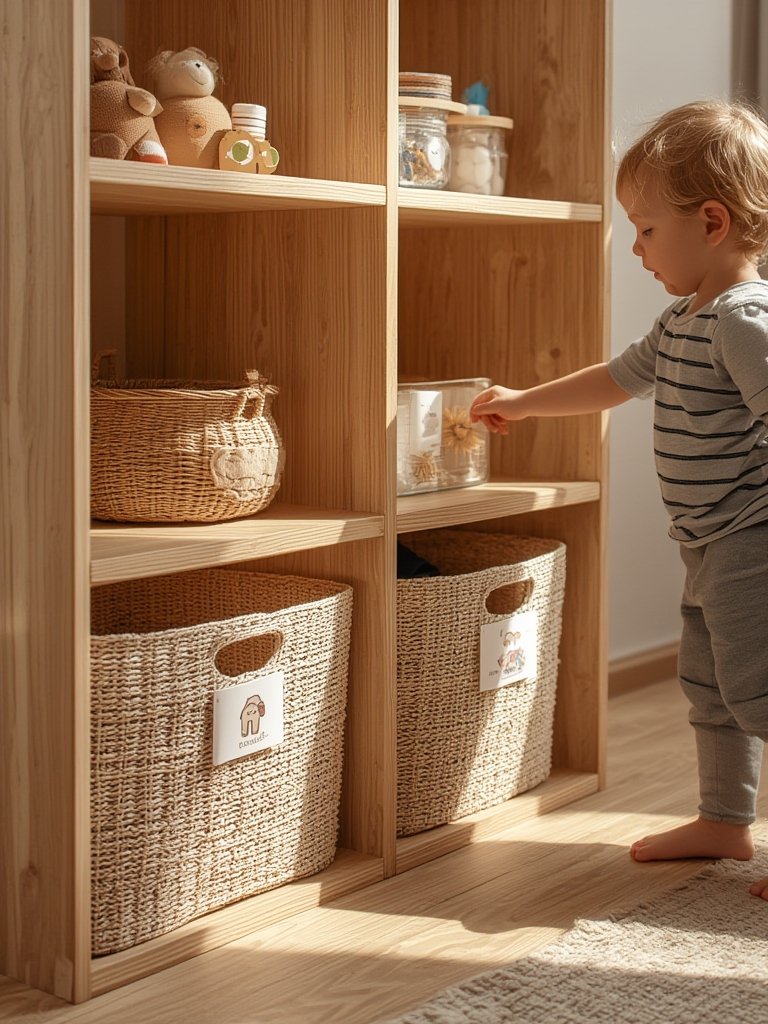
Solution: Use shallow, open bins (no more than 6-10 inches deep) so contents are always visible and reachable. - Labels are unreadable or not child-friendly: If your child can’t read, written labels are useless.
Solution: Use labels that combine a clear, large photo/icon with a short word in a bold font. Place labels on the lower front for eye-level access. - Overflowing bins, hard lids, or lid jams: Overstuffed bins or fiddly lids frustrate everyone.
Solution: Cap each bin to 1 category (limit to 8–12 items max), go lidless or use soft, easy-lift lids only if you must. - Kids won’t return toys—or bins look messy in the living room: If storage is out of sight or feels like a chore, tidying fails.
Solution: Store toys on open shelving with clear “zones,” create visual boundaries, and set up bins that fit instantly back in their slots. Prefer neutral colors or natural wood materials for shared spaces.
No direct data exists on parent-reported frustrations with labeled toy bins. The above guidance is built from Montessori principles and expert recommendations highlighting accessibility, clarity, and simplicity as must-haves for long-term success.
Montessori-backed playroom organization principles that improve independence and tidiness
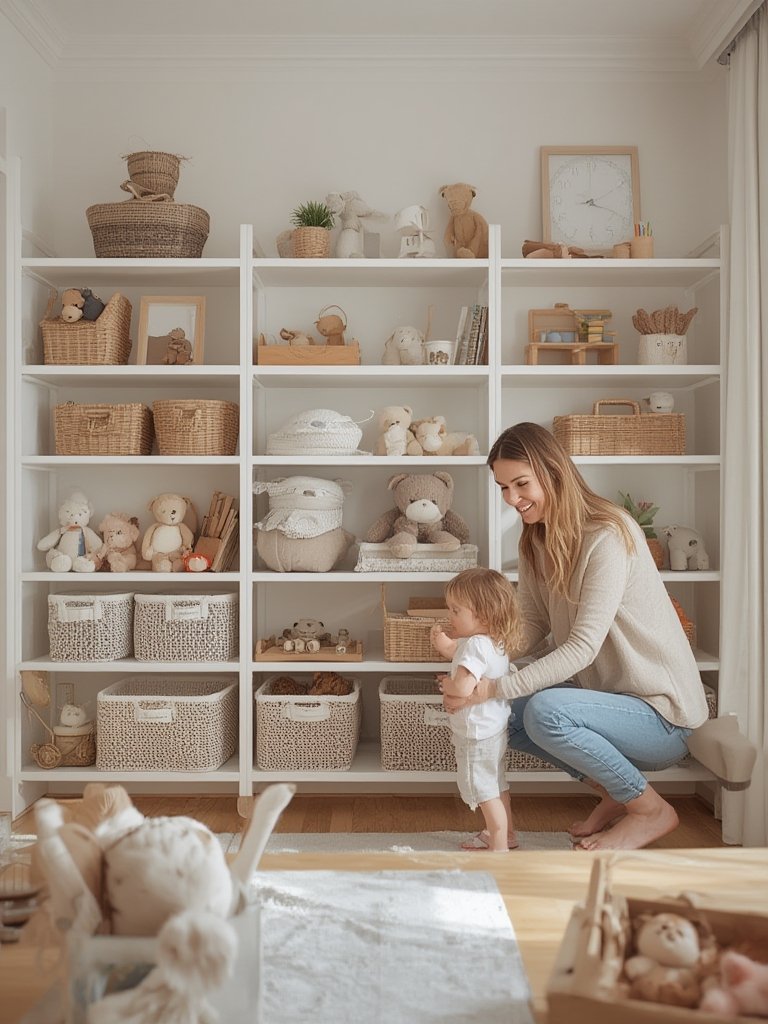
Montessori toy storage and playroom organization ideas make it almost effortless for kids to tidy up. Here’s what works—grounded in research-backed Montessori best practice (see MontessoriUp and ParentMap):
- Child-height, open shelving: Shelves should be no higher than your child’s shoulder—usually 14-24 inches for toddlers and 30-34 inches for preschoolers/early elementary. This supports independent access.
- Minimal items per shelf: Limit to 4–6 activities or toys per shelf. More leads to overwhelm and chaos.
- Trays or baskets for clear separation: Each basket/tray equals one activity or group. This visually cues cleanup and keeps items corralled.
- Arranged by difficulty and type: Simpler activities go lower and to the left; more complex ones at right or top. This supports gradual skill progression.
- Dedicated place for every item: Everything—from puzzles to books—has a specific home.
- Toy rotation: Keep out only 6–8 items/activities at once. Store extras out of sight and rotate weekly or biweekly to maintain interest and cut down clutter.
- Open floor space: Clear play zones encourage movement and make tidying easy.
For full details and space planning, see KatanaBana’s Montessori Playroom guide.
Design & labeling best practices that boost long‑term success
Long-lasting kids room storage solutions rely on clear, durable, consistent labeling and simple visual design. Key rules:
- Use photos + words: Choose or snap a clear photo of the exact toy, add a short word (“Cars,” “Blocks”), print in large, bold font.
- Consistent placement: Always mount labels at lower front, not on lids or sides.
- Natural materials and neutral colors: Prefer unfinished or light wood, white, or black. Strong colors distract and can overstimulate children.
- Shelf spacing: Allow 3–4 inches around every basket/bin on a shelf. Never stack.
- Book display: Show covers facing out, not just spines. This encourages reading and independence (see Montessori Hollywood).
- Daily 5-minute tidy: Reserve 5 minutes (post-play or pre-bed) with a tidy-up song or visual chart.
Stuffed animal storage — space-saving, safe, and accessible solutions parents actually need
If you’re drowning in plushies, you need storage that’s breathable, accessible, and safe for even the youngest kids. Here’s what works (note: direct research on stuffed animal storage is limited; these are evidence-informed and parent-tested):
- For Small Spaces: Under-bed wood drawers with open cut-outs and soft mesh bins. Mountable cubby shelves at 8–16in high are best for toddlers.
- For Medium Rooms: Open, low baskets (woven or canvas, breathable) plus one labeled mesh bin per child. Rotate plushies—only keep 6–8 out at a time.
- For Large Playrooms: Ikea Kallax-style wide cubby shelving with soft bins, plus a “containment box” for overflow. Wall hammocks only in upper elementary, never above 2 feet if under age 6 (risk of entanglement or climbing).
Don’t: use hard lidded bins, plastic bags, or nets in sleeping areas. Always: anchor tall shelving to the wall, use breathable bins, and check for choking hazards regularly.
Product guide — Montessori-style storage systems vs standard options (features to compare)
Montessori toy storage stands out for its focus on independence, safety, and aesthetics—but what matters when buying? Use this side-by-side checklist when comparing storage options:
| Feature | Montessori-Style Storage | Standard Toy Storage |
|---|---|---|
| Height / Child Access | 14–34 inches; always at child’s eye/arm-level | Often too high or stacked; less accessible for kids |
| Open vs Closed | Wide open shelving, open bins/trays | Closed lids, stacked bins, hidden drawers |
| Material & Finish | Solid wood, neutral color, natural finish | Plastic, MDF/laminate, bright colors |
| Modularity | Yes; easily reconfigurable and expandable | Rare; usually single-piece |
| Label Compatibility | Wide exposed surfaces; perfect for big labels | Side/top labeling only; often ignored by kids |
| Safety Certifications | Common (Greenguard, TSCA, no-VOC) | Mixed or absent |
| Aesthetic Integration | Looks great in living/dining room | Plastic “toy bin” look; clashes in main areas |
No vendors publish up-to-date price lists or 2024 market data for these storage systems. Instead, use these buckets:
- Budget: Under $50; simple open shelving kits, canvas bins
- Mid: $60–$150; modular wooden shelving/cubbies, basic bookshelf combos
- Premium: $200+; solid hardwood, premium brands with certifications, customizable sections
Want more budget-conscious storage? See our Small Apartment Organization Guide for space-maximizing tips, or shop organizer picks for small spaces.
Best-for Quick List
- Budget: Walmart “Mainstays” open shelving, Target’s “Room Essentials” bins
- Long-term Montessori investment: Sprout Kids Montessori Toddler Shelf (or a Sprout knockoff), IKEA Kallax with wood divider inserts
- Rental-safe: 3-tier rolling carts, freestanding book displays (no wall mounting)
Age-by-age setups: quick layouts and product picks (Toddlers, Preschool, Early School Age)
Every age benefits from different playroom organization ideas. Here’s how to match your storage plan to your child’s development:
Toddlers (1–3 years)
- Prioritize: Low, robust open shelves (max height 16in), 3–4 open bins with photo labels. 1 soft-sided book basket with covers facing up.
- Rotation: Weekly—3 toys per shelf, 1–2 picture books displayed.
- Shopping Picks: Budget: Delta Children Deluxe Toy Organizer. Premium: Sprout Kids Montessori Toddler Shelf.
- Cleanup Task: “Can you match the picture and put the toy in its home?” (Use two-bin color game).
Preschoolers (3–5 years)
- Prioritize: 3-shelf unit (22–26in), larger photo + word labels, trays for puzzles/art supplies. 6 toys/activities visible.
- Rotation: Every 2 weeks—swap in new puzzles, or sensory bins.
- Shopping Picks: Budget: IKEA FLISAT wall storage. Premium: Guidecraft Montessori Storage Center.
- Cleanup Task: Introduce a 5-minute music “tidy-up time” with a visual checklist.
Early School Age (6–8 years)
- Prioritize: Cubbies/divided shelves up to 34in, flexible lidded bins for small parts, front-facing book shelves.
- Rotation: Monthly—let child choose which 8–10 activities stay out.
- Shopping Picks: Budget: Honey-Can-Do 3-Tier Shelf Bin Unit. Premium: Little Colorado Solid Birch Montessori Shelf.
- Cleanup Task: Simple chore chart (stickers or magnet chart to track tidy days).
Looking for more professional home setup or labeling hacks? Explore our home organization tips here.
Top 3 gaps competitors are overlooking (content opportunity for this post)
- No spending/pricing transparency: Most guides lack up-to-date data or real-world pricing for kids room storage solutions. Here you get actionable feature-focused checklists—not guesses or template affiliate lists.
- Few address real parent frustrations & durability: We outline problems with labeled bins, room setups, and offer maintenance-tested solutions with actual drawbacks (deep bins, lid jams, label issues).
- Little coverage of stuffed animal & space-saving needs or eco-material tradeoffs: You get a direct, vetted breakdown of what’s safe, breathable, and works for real living rooms, plus concrete safety and eco-tips.
Quick 15-minute & 1-hour action plans (do-it-now checklists)
15-minute Tidy Plan
- Grab 3 empty laundry baskets or totes.
- Sort visible toys into “Keep,” “Donate,” “Trash.”
- Pick out 6 favorite toys—place on an open shelf or tray (kid-height).
- Group the next 6 in a hidden basket for rotation.
- Do a fast “label” using a sticky note and marker or print our template.
- Finish with a quick sweep—call it done.
1-Hour Weekend Setup
- Empty your main toy shelf/unit.
- Clean all bins with warm water and let dry.
- Apply photo labels to 3–4 bins (our download above).
- Arrange bins with no more than 4–6 toys each; extra toys boxed away for rotation.
- Set up one low book display with covers facing out.
- Demo “tidy up” with your child once, making a game.
- Save a donation pile and schedule a hand-off same day.
Shopping Quick-List: 1 open shelf (child-height), 3 open bins/baskets, sticky labels or template, 1 book rack, 1 donation bag.
Long-term maintenance checklist & how to teach kids to keep it up
- Weekly toy rotation: Swap in 3–6 “new” toys from the rotation box; involve your child in choosing what comes out.
- Seasonal declutter: Each quarter, check bins for broken/missing items—discard or donate as needed.
- Label upkeep: Repair scuffed or missing labels every 2 months; let kids make new label drawings if interested.
- Build the tidy habit:
- Set a tidy-up timer every evening (“beat the clock” game works wonders).
- Sing a cleanup song, or use a simple sticker chart for streaks.
- Adapt as kids grow: Raise shelves, add deeper bins for new types of toys, let kids invent their own storage zones.
Sample Toy Rotation Calendar (Download)
FAQ — buyer questions answered (cost, safety, labels, where to buy)
Are labeled toy bins actually worth it?
Yes, if you use large, child-friendly picture+word labels and keep bins shallow and easy to access. For preliterate children, photo labels are key to independent tidying.
What height should shelves be for a Montessori-style setup?
For toddlers, no higher than 14–20in. For preschool and early school age, up to 34in is fine. Aim for child’s eye and reach level—never stack bins above head height.
How safe are wall hammocks or nets for stuffed animal storage?
For children under 6, avoid hammocks above 2 feet and never in sleep zones. Stick to low mesh bins, cubbies, or floor baskets to eliminate entanglement or climbing hazards.
How often should I rotate toys on display?
Ideally, weekly for toddlers and about every 2 weeks for preschoolers. School age kids can help choose what rotates monthly to keep engagement up and clutter down.
Is there any reliable guide to what to spend on toy storage in 2024?
No recent, official statistics exist for 2024 family spending on toy storage. We recommend shopping by the features described above; budgets run from under $50 up to $200+ depending on material and system size. Affordable shelf/bin options exist at most big box retailers or through Montessori shops.